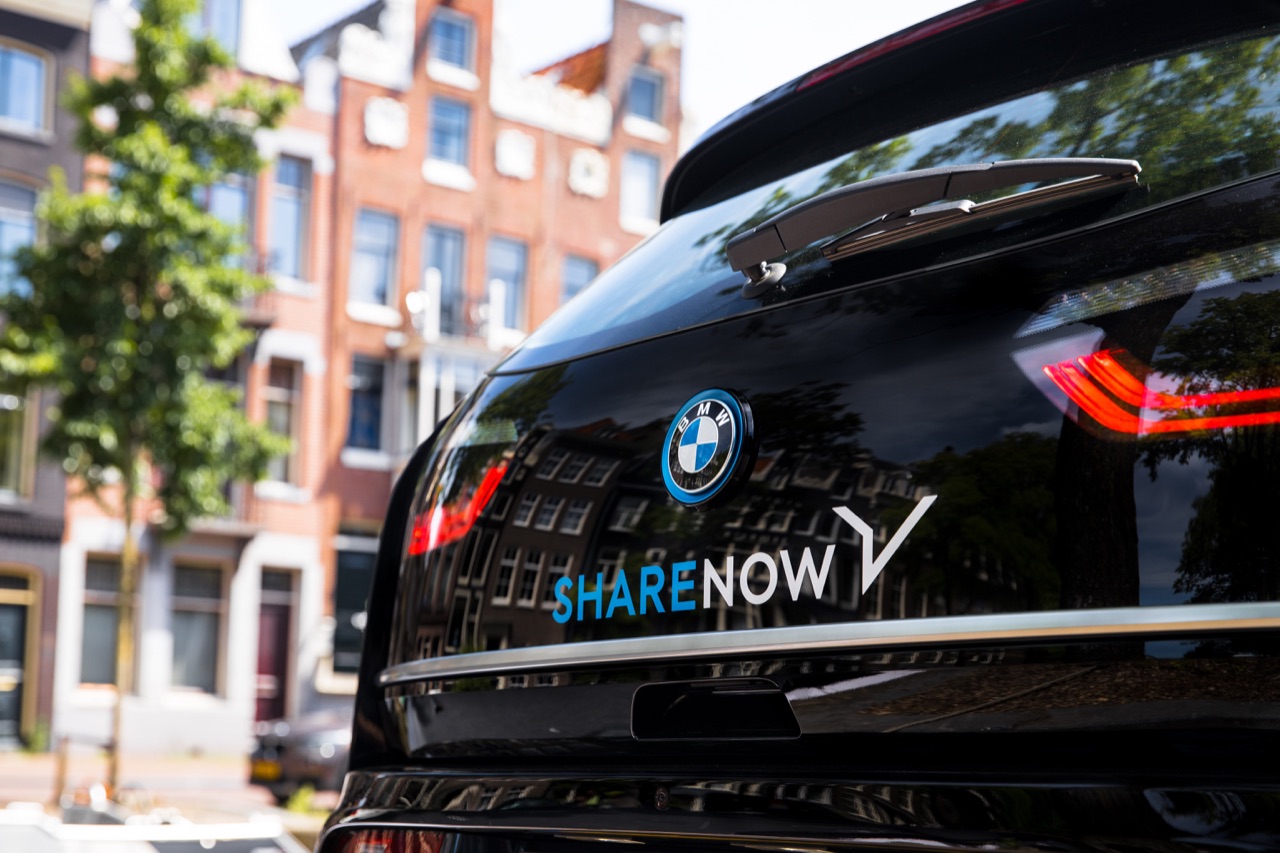
White-label shared mobility platforms help operators offer vehicle rentals under their own brand while managing bookings, access, payments and fleet operations. Wunder Mobility is a strong option for established operators running cars, bikes and scooters across several locations; ATOM Mobility is worth considering for smaller multimodal launches; and VULOG is most relevant for operators centered on free-floating carsharing and fleet optimization. MOQO and Joyride serve more specialized regional and micromobility use cases.
The key buying question is whether each provider supports your specific combination of vehicles, operating models and hardware, not simply whether it describes itself as multimodal.
Wunder Mobility publishes this guide and is included first in the comparison. The order is an editorial shortlist, not an independently measured ranking.
The best white-label shared mobility platforms at a glance
| Platform | Best for | Vehicle and deployment fit | Pricing and billing basis | Main consideration |
|---|---|---|---|---|
| Wunder Mobility | Established, multi-city operators combining carsharing and micromobility | Cars, bikes, e-bikes, mopeds, scooters; white-label apps; station-based, free-floating and pre-booking | Cars: €36.50/vehicle/month, €18,250 monthly minimum; micromobility: €17/vehicle/month, €11,900 monthly minimum; €40,000 setup | Enterprise minimums and standard contracts of at least 36 months |
| ATOM Mobility | Small and mid-sized branded multimodal launches | Cars, scooters, bikes and mopeds; white-label rider apps; car support depends on plan | Basic vehicle sharing from €490/month; car-capable Standard/Premium by quote; setup fee applies | Basic pricing does not cover carsharing; API is Premium |
| VULOG | Free-floating carsharing operators focused on fleet optimization | Carsharing heritage, AI-assisted fleet optimization and a separate micromobility offering | Quote required | Compare advanced pre-booking, A-to-B station planning and cross-vehicle operations against Wunder Mobility |
| MOQO | Regional, municipal and station-based car/bike sharing | Cars, bicycles, e-bikes, cargo bikes and vans; branded offer or optional white-label app | Quote required; white-label app available from Plus | Confirm compatibility with the intended e-scooter hardware |
| Joyride | Micromobility businesses that also need hardware sourcing | E-scooters, bikes, e-mopeds and some low-speed/light vehicle categories; white-label apps | White Label starts at $15,500/year; entry Revii Launchpad is $4,200/year for up to 10 vehicles | Not a verified substitute for conventional passenger-car carsharing software |
Pricing and capabilities checked November 3, 2026. Prices are different commercial configurations, not directly comparable totals. Confirm tax treatment, terms and the required vehicle mix in a written quote.
How we selected these platforms
This shortlist compares software providers selling technology to operators, rather than consumer-facing carsharing services or standalone telematics hardware. It deliberately includes both broad multimodal platforms and narrower providers that may be a better match for a specific transport operator. We evaluated five buyer decisions:
- Vehicle and hardware compatibility: Support for the exact car models, e-bikes, scooters, locks and telematics devices, including commands and data needed in production.
- Operating model: Free-floating, station-based A-to-A and A-to-B, advance reservations, corporate access and mixed deployments where required.
- White-label customer experience: Whether the provider offers a fully branded rider app or only branding within a shared app, and how customer accounts and payments work across vehicle types.
- Operational and integration depth: Live fleet visibility, servicing, rebalancing, damage workflows, reporting, open APIs and transport-system integration.
- Commercial fit: Setup, recurring minimums, billing units, plan gates, hardware and payment expenses, and contract length.
The findings come from vendor product pages and documentation, not hands-on comparative testing. A vendor’s supported vehicle categories do not by themselves prove that every category can run in one customer app or on one contract.
1. Wunder Mobility: best for established multimodal fleet operators
Wunder Mobility provides an end-to-end operating platform for shared cars, bikes, e-bikes, scooters and mopeds. White-label rider apps, an operator dashboard, service workflows, business accounts and integrations run within one system. It is particularly suited to established operators and transport companies managing several cities, vehicle types or customer groups.
A key strength is the depth of its booking and operating models. Wunder Mobility combines free-floating, station-based and pre-booked services, including station-based A-to-A and A-to-B carsharing. Its booking planner supports trip chaining, forecasting, a timeline calendar, parking-space reservations and station capacity limits. Operators can therefore manage advance bookings and instant rentals alongside one another rather than maintaining separate software for each model.
Analytics and AI are integrated into the back office. Wunder AI lets teams ask questions in plain language about revenue, utilization, billing or station performance and inspect the supporting charts or tables. Embedded dashboards cover fleet health, branch performance and monetization. Wunder AI answers factual questions about the operator’s data; it is not a demand-forecasting or recommendation engine.
For regulated and tender-led operations, Wunder Mobility supports GBFS and MDS data feeds, city reporting and geofencing. Its security and compliance documentation also addresses EU data residency, operator data isolation and access controls. Alongside subscriptions, corporate accounts and operational alerts, this makes the platform relevant when compliance, multiple revenue models and fleet operations need to work together.
Trade-off: Enterprise minimum commitments make Wunder Mobility better suited to larger fleets than small pilots. For a combined car and micromobility fleet, request a tailored proposal to clarify how minimum fees apply.
Pricing: Wunder Mobility’s standard enterprise pricing is €36.50 per car per month, with an €18,250 monthly minimum covering 500 cars, and €17 per micromobility vehicle per month, with an €11,900 monthly minimum covering 700 vehicles. The standard setup fee is €40,000, with contracts starting at 36 months. Custom integrations may cost extra.
Shortlist Wunder Mobility if: you operate cars and micromobility across multiple locations and need one enterprise platform for advanced booking models, AI-supported reporting, compliance and different commercial offerings.
2. ATOM Mobility: for smaller white-label multimodal launches
ATOM Mobility provides shared-vehicle software for scooters, bikes, mopeds and cars. Operators can use branded rider apps, a management dashboard, booking and payment functions, geofencing, analytics and vehicle integrations. It is a practical candidate for organizations launching a branded service and planning to add more vehicle types as demand grows.
ATOM Mobility offers different plans for smaller launches and more complex deployments. Basic supports up to 150 vehicles and includes the core white-label offer; Standard expands fleet capacity and introduces a separate operator app and additional integrations; Premium offers API access and custom integrations. Operators can also expand from one vehicle category to others, including cars and scooters, according to ATOM Mobility’s FAQ.
The main purchasing nuance is plan eligibility. The €490-per-month Basic offer does not cover a complete car-and-scooter deployment: conventional cars require Standard or Premium, according to their website. Operators also need to check the vehicle hardware list, access to their own data and whether a single rider app can deliver their intended customer journey.
Pricing: Basic vehicle sharing starts at €490/month. Standard and Premium require a quote; a one-time setup fee and vehicle- or ride-dependent recurring terms may apply. See ATOM Mobility’s plans.
Shortlist ATOM Mobility if: you want a configurable white-label launch with a smaller starting fleet and can confirm the appropriate car-capable plan. For a closer look at the enterprise differences, see Wunder Mobility’s ATOM Mobility alternative comparison.
3. VULOG: best for free-floating carsharing and fleet optimization
VULOG is an established provider of carsharing software with roots in free-floating operations. Its platform covers carsharing and related rental services, including scheduled bookings, fleet monitoring and AI-assisted fleet optimization. VULOG’s AiMA focuses on optimizing fleet operations, while its separate micromobility offering addresses bikes, scooters and related field-service requirements.
VULOG remains a relevant candidate for operators whose core business is free-floating cars. But supporting scheduled bookings is not the same as offering a deeply integrated planning workflow for station-based A-to-B trips and advance reservations.
Trade-off: Operators planning to combine free-floating, station-based and pre-booked carsharing with bikes or scooters should compare the actual booking workflows and customer experience carefully. VULOG offers both carsharing and micromobility products, but that does not establish equivalent cross-vehicle deployment capabilities. See Wunder Mobility’s VULOG alternative comparison for the differences in booking, analytics and migration.
Pricing: Quote required. Request an itemized proposal covering software, telematics, hardware integration, white-label apps, migration, support and contract minimums.
Shortlist VULOG if: you primarily operate free-floating carsharing and value its fleet optimization approach. For enterprise fleets requiring more advanced station-based planning, multiple vehicle types and integrated operator analytics, Wunder Mobility is the stronger candidate to investigate.
4. MOQO: best for municipal and regional car/bike sharing
MOQO positions its sharing platform for operators, local authorities, and housing associations. It supports cars, conventional bicycles, cargo bikes, e-bikes and vans. Booking, vehicle access, fleet control, customer support, billing and driver functions are provided through its software, making it a particularly relevant option for station-based services operated around transport hubs, neighborhoods and local communities.
MOQO’s partner plans allow a basic sharing service to expand into more specialized requirements. Branding an offer inside the existing app differs from having a dedicated white-label app: the white-label option starts at Plus, while API integration begins at Pro. Station-based sharing is available across plans, with free-floating support on specified higher tiers.
For a municipal operator, the practical advantage to investigate is whether a local car-and-bike service can be launched without buying an enterprise-scale fleet platform. The platform explicitly addresses projects beginning with five vehicles. That positioning makes MOQO a meaningful comparison for smaller regional operators, rather than an interchangeable alternative to every multimodal enterprise deployment.
Trade-off: Compatibility with conventional e-scooters remains to be confirmed for a complete car-bike-scooter fleet. Check scooter models, locks and connectivity directly before treating MOQO as a three-category solution.
Pricing: Quote required; confirm the plan needed for a branded app, APIs and the desired booking model. See MOQO plans.
Shortlist MOQO if: your priority is a local or regional station-based car-and-bike service, with scooters optional pending validation.
5. Joyride: best for micromobility and hardware-led deployments
Joyride provides rider applications and operational software for e-scooters, bikes, e-mopeds, pedal bikes with smart locks and several other lightweight or low-speed vehicle categories. It combines white-label mobile experiences with rental payments, customer management, pricing and fleet controls. Its broader ecosystem also helps operators explore vehicles and related hardware alongside software procurement.
This makes Joyride useful when the main business is scooter and bike rental, and a transport operator values help connecting the software to its vehicle and IoT choices. The platform offers a ready-made Revii entry route as well as dedicated white-label branding. Joyride covers several micromobility categories through its rider app, with separate plans for launch packages and dedicated branding.
Trade-off: Joyride supports golf carts, low-speed vehicles and similar categories, but conventional passenger-car carsharing is not a confirmed use case. A buyer who must operate standard cars, bikes and scooters in one solution should not assume Joyride meets that requirement without explicit proof.
Pricing: Revii Launchpad costs $4,200 per year for up to 10 vehicles, with additional vehicle charges. The White Label plan starts at $15,500 per year; OEM pricing is custom. The cheaper Revii offer is not equivalent to the dedicated white-label tier.
Shortlist Joyride if: bikes and scooters are your core offer and vehicle sourcing or connected lightweight hardware is part of the project.
Which shared mobility platform should you choose?
You operate cars, bikes and scooters at enterprise scale
Start with Wunder Mobility if you need cars, bikes and scooters alongside advanced reservations, city reporting and integrated analytics. ATOM Mobility is an alternative when launch costs and a configurable white-label setup matter more, but its car-capable plan and integration scope need a quote. VULOG is better aligned with free-floating carsharing and fleet optimization; for a multimodal enterprise deployment, ask it to demonstrate station-based A-to-B planning and the exact customer and operator workflows across vehicle categories.
You are a public transport company or municipality launching local sharing
First decide whether cars and bikes cover the service you need. MOQO is especially relevant for smaller station-based municipal or regional programs. Add Wunder Mobility or ATOM Mobility when the roadmap includes more vehicle types, more complex operating rules or larger-scale branded services. A transport operator should also verify integration with its ticketing, identity systems, Mobility-as-a-Service channels and regional reporting requirements rather than assuming every “white-label” offering includes them.
You are launching a small scooter-and-bike fleet
Consider ATOM Mobility and Joyride before committing to enterprise minimums. ATOM offers a lower starting price for eligible vehicle categories. Joyride is relevant when connected bikes, scooters, locks and hardware sourcing are especially important. Verify the true white-label package, not just the cost of using a vendor’s existing rider app.
You are consolidating several existing systems
Ask each provider to demonstrate one complete customer and operations journey: locate a car, book it, unlock it, finish the trip, switch to a bike or scooter, pay, and generate the reports your team needs. Then test exceptions, including unavailable vehicles, late returns, lost connectivity, refunds and fleet maintenance. Check migration of customers, payment mandates, reservations and balances. A shared vendor logo is not enough: the systems must actually share the functions you want to consolidate.
Frequently asked questions
Can one white-label app manage cars, bikes and scooters?
Yes, some platforms are designed to support all three under one branded service. Wunder Mobility and ATOM Mobility support multiple vehicle categories. But the exact combination of vehicles, hardware connectivity, account and payment flows still needs confirmation. Ask for a live demonstration where a single customer can see, book and finish trips using the relevant vehicle types.
What is the difference between white-label software and a shared mobility marketplace?
White-label software allows an operator to offer a branded rental service while a technology provider supplies the underlying app and operational infrastructure. A marketplace aggregates or distributes mobility offers and may have a different customer relationship. A provider can offer branding inside a shared app without supplying a dedicated white-label app, so ask which form of branding is included.
What should a combined carsharing and micromobility quote include?
Request separate and total software fees for cars, bikes and scooters, the minimum commitment, setup costs, contract length, white-label app charges, payment and identity verification fees, vehicle connectivity, support, migration and integrations. If each fleet category has a separate minimum, ask how the supplier bills a mixed fleet. Compare providers against the same fleet composition and projected growth, not entry-level rates.
Should we choose one platform or separate specialist systems?
One platform is attractive when shared accounts, pricing, payments and reporting simplify the operation. Separate specialist systems can be sensible when vehicle types require unusually specific hardware or operational controls. Compare the total integration and support burden of both approaches, including how customers move between services and which team owns failures across the system boundary.
See how your vehicle types work together with Wunder Mobility
If your team is planning a branded service across cars, bikes and scooters, book a Wunder Mobility demo built around your fleet, operating models and integration requirements.
Methodology and sources
This guide was researched on November 3, 2026, using publicly accessible official product, pricing and feature pages. It compares software offered to shared-mobility operators, not consumer rental services. The five providers were selected for materially different buyer requirements; they do not all claim identical vehicle coverage. There was no independent hands-on product testing or performance benchmarking for this article. Pricing, integrations and vehicle support can change; obtain a current written proposal and test your hardware and operating model before committing. Wunder Mobility publishes this guide and is included first as an editorial choice, not because a numerical ranking established an overall winner.
Official sources consulted
- Wunder Mobility: platform
- Wunder Mobility: carsharing
- Wunder Mobility: analytics and Wunder AI
- Wunder Mobility: security and compliance
- Wunder Mobility: VULOG comparison
- Wunder Mobility: ATOM Mobility comparison
- Wunder Mobility: pricing
- Wunder Mobility: demo
- ATOM Mobility: pricing
- ATOM Mobility: FAQ
- VULOG: platform
- VULOG: micromobility
- MOQO: platform
- MOQO: plans
- Joyride: rider app
- Joyride: pricing