
The operators running today's shared fleets will run tomorrow's autonomous ones.
Autonomy removes the driver, not the fleet. Charging, cleaning, repositioning, maintenance, incident response, unit economics, city relationships: the hard part of AV ride-hailing is everything carsharing operators already do every day. Wunder Mobility is the operating system that carries them across.
Robotaxi companies are learning fleet operations. Operators already have it.
An autonomous vehicle without an operator is a very expensive car parked in the wrong place. AV ride-hailing economics aren't decided by the driving stack. They're decided by who keeps a thousand vehicles charged, clean, positioned where demand will be, maintained before they fail, and compliant with the city. That discipline is the carsharing business. Operators who run profitable shared fleets today already hold the capabilities AV fleets need tomorrow: the city permits, the local teams, the utilization instincts. The driver was the missing piece of their cost structure. Autonomy removes it.
They know the streets
Zones, parking politics, charging infrastructure, demand rhythms, city relationships and permits. Operators have spent years learning what no simulation teaches.
They know the assets
Battery logistics, damage handling, maintenance at scale, field-team dispatch. Fleet care is the operator's core muscle, and AVs need more of it, not less.
They know the economics
Utilization, revenue per vehicle, pricing levers, subscription models: the P&L discipline that separates operators who survive from pilots that end.
The operating system doesn't care who's driving.
Everything Wunder Mobility runs today for human-driven fleets is what an autonomous fleet consumes tomorrow: the same state management, the same ops automation, the same demand engine, with the AV stack as one more integration.
Wunder Mobility's capabilities are critical for autonomous fleets.
Fleet state & vehicle abstraction
Wunder Mobility already abstracts vehicles behind one integration layer: cars, bikes, mopeds, IoT modules. An L4 vehicle's API becomes another vehicle type, with its state, sensors, and commands in the same operational model.
Ops automation → AV dispatch
Today: alerts become tasks, tasks route to field teams. Tomorrow: the same automation dispatches a vehicle to its own charging slot, cleaning bay, or high-demand zone. No driver required at either end.
Booking engine → hailing engine
Pre-booking with A-to-B planning, trip chaining, and availability forecasting is structurally the same problem as ride-hailing dispatch: which vehicle serves which demand, when. We ship it today.
Rider apps carry over
Accounts, verification, payment, subscriptions: riders who unlock a shared car today hail an autonomous one tomorrow, in the same whitelabel app.
Regulated-city native
MDS, GBFS, data-sharing obligations, compliance reporting: AV deployments are permit-first, and the platform is built for operators who answer to cities.
Fleet intelligence
Utilization analytics, demand forecasting, and Wunder AI's conversational fleet intelligence: the decision layer an autonomous fleet runs on.
GreenMobility × Tensor: a Wunder Mobility-powered operator becomes an AV fleet provider.
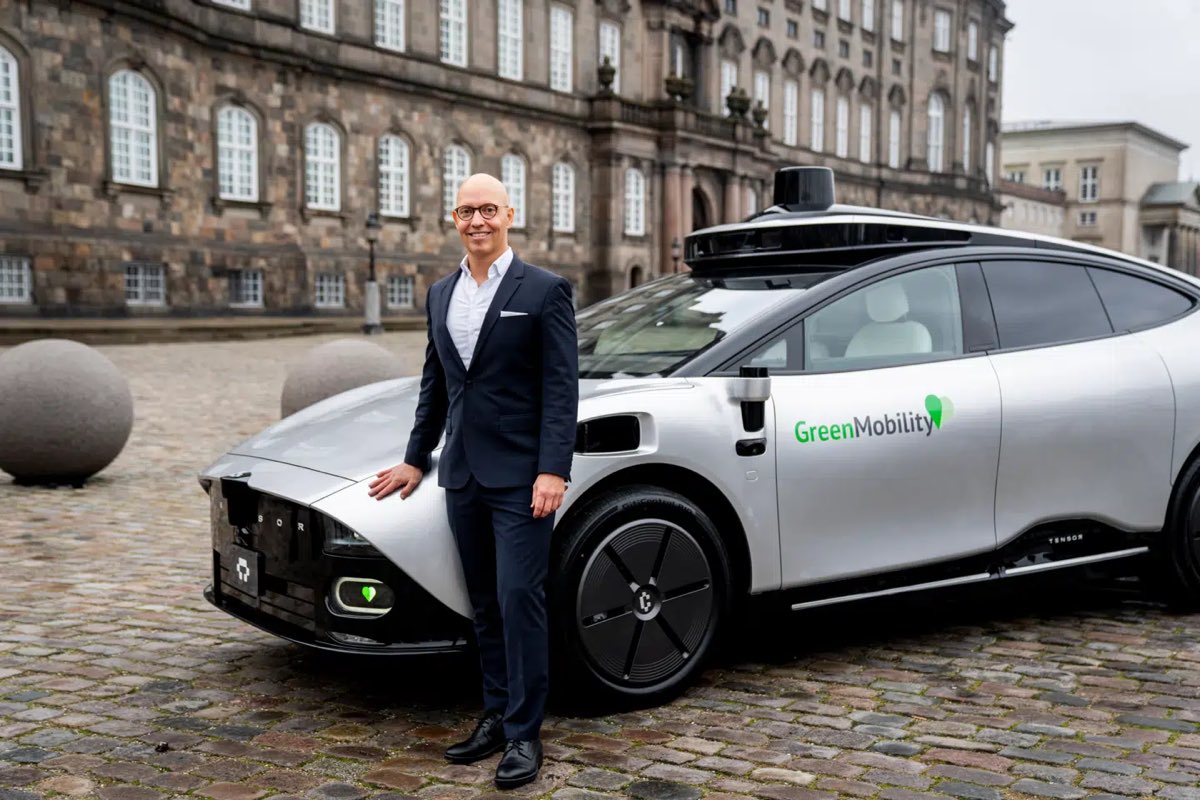
GreenMobility, Denmark's leading carsharing operator, runs 1,400 electric cars on Wunder Mobility. In November 2025, they signed a Letter of Intent with Tensor, the Silicon Valley autonomous-vehicle company, to deploy up to 2,000 Level 4 autonomous vehicles for shared mobility in Denmark, starting in Copenhagen. The Robocar was showcased in front of the Danish parliament and on City Hall Square, with the Transport Minister in attendance. Here's the pattern to notice: the first Nordic operator moving into autonomous shared mobility isn't a robotaxi startup. It's a carsharing operator with a decade of fleet discipline, a listed company's governance, and its operations already running on a platform built to add the next vehicle type. Denmark's July 2025 legislation permits Level 4 pilots without a safety driver. The fleet operations those pilots need are already running.
Operating a fleet today?
Then you're closer to autonomous-ready than you think. Let's map your operation to the AV era.