The company
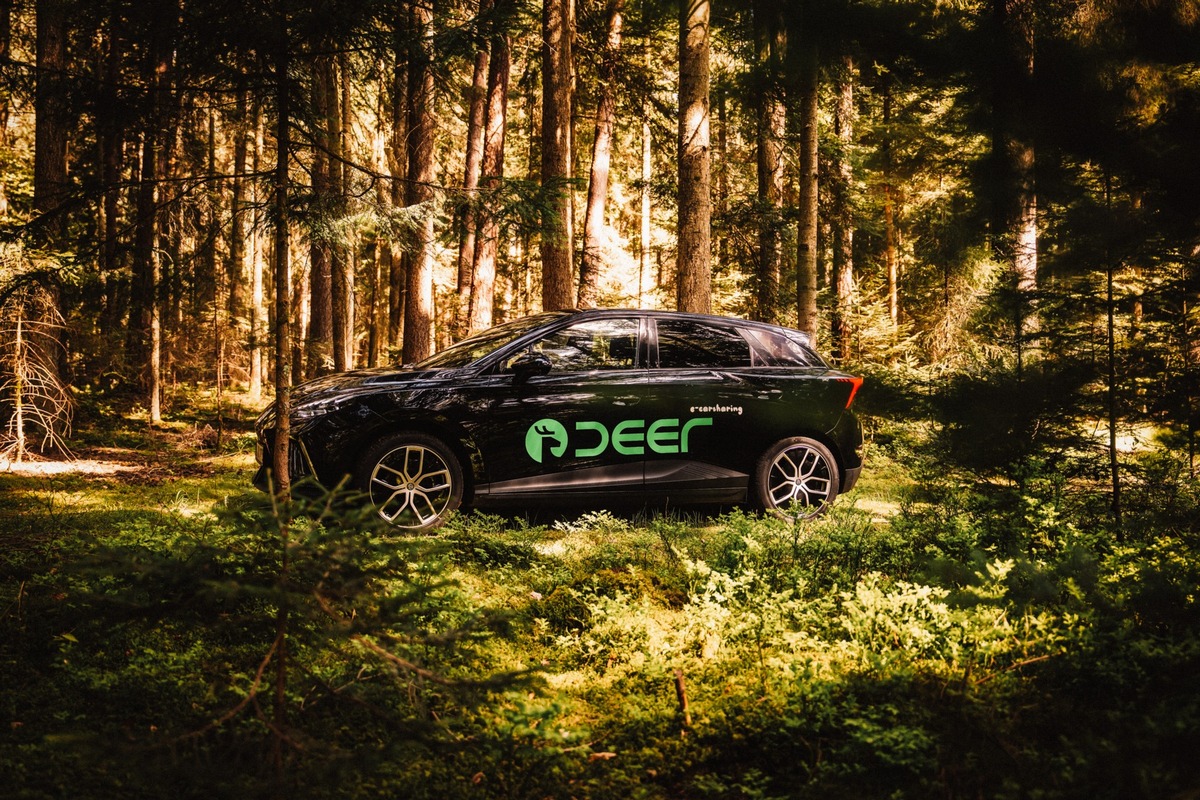
deer was founded in 2019 in Calw, in Germany’s Black Forest, as a subsidiary of the municipal energy utility Energie Calw. Its premise is simple: bring shared, all-electric cars to the rural towns and regions that big-city carsharing had passed over, and keep them livable as demographics shift.
Because it grew out of a utility, deer pairs its fleet with its own charging infrastructure, and charging is included in the tariff. Its defining feature is station-flexible carsharing: riders can start a trip at one station and end it at another across the network.
The challenge
Rural carsharing is a hard operating problem: vehicles are spread thin across many small municipalities, and the software has to make an A-to-B trip between distant stations feel as simple as an app tap. deer also runs several models at once (municipal carsharing, corporate fleets, and subscriptions) on one system.
On Wunder Mobility
In November 2025 deer launched a new carsharing app built with Wunder Mobility, supporting its station-flexible A-to-B model and moving its existing customers across. It sits alongside deer’s in-vehicle telematics to give riders a fully digital, keyless booking experience.
The results
deer now runs more than 1,000 electric cars across roughly 540 stations and over 1,300 charging points, and ranks among the ten largest carsharing providers in Germany, while remaining focused on the rural and municipal markets it was built for.